20 Handy Reasons For Choosing CUANSLOT88 Website
Wiki Article
What is Rtp? A Key Factor In Choosing Slot Games At CUANSLOT88
When you start to look around the slot lobby on a website like CUAN88, the sheer number of games available can be overwhelming. Thousands of games, each featuring different themes, special features and jackpots, are all competing for your attention. However, beneath the flashy graphics and bonus rounds, there's a number that matters far more than any other number--a figure which tells you mathematically, what game gives you the best chance to increase your bankroll. That number is RTP. However, despite its significance, RTP remains one of the least understood concepts among casual players. Some believe it's a sure thing however, some people don't understand it at all. Knowing what RTP actually is, and what it does and doesn't mean, is crucial any person who wishes to make informed choices regarding the best place to invest their money. Here are the top ten important things you need to be aware of about RTP.
1. The Basic Definition What is RTP Actually What Does it Mean?
RTP means Return to Player. It's a hypothetical percentage that is the amount a slot machine is programmed in order to return to players over a very long length of. If a machine has an RTP of 96%, that's each $100 bet the game, a probability is that it will pay back $96 in earnings, while also retaining $4 in profit for the house. The key word here is "theoretical." This isn't a guaranty for any particular session, but rather a statistic made over millions, maybe billions of spins. Imagine the process as flipping a coin. Over a million flips, it's going to come up with heads 50 percent of the times, but if you flip it ten times, it could easily be 70% heads.
2. RTP is one of the Inverse of House Edge
Another way to learn about RTP is to look at its opposite, the house edge. This edge 100% minus the RTP. So, a slot with a 96 percent RTP has a 4% house edge. This advantage is mathematical the casino has incorporated in the slot. Every time you spin, that's 4%. This is what which the casino is expected to keep for the duration of time. Different games have different house edge and that's why comparing RTPs is crucial. A game that has 98% RTP (2 2 percent edge on the house) is mathematically twice as good for the player than one with a 96 percent RTP (4% house edge) which is at most in the long run.
3. RTP Is Calculated Over the Period of Time that the Game
It's crucially important to understand the scope of RTP calculations. The 96% figure isn't based on 100 spins or a thousand spins, or even a hundred thousand spins. It's determined by the entire period of time that the game is played, typically encompassing millions of sessions. In the short-term this is how everyone plays, anything can occur. You can play a 98% RTP slot and be wiped out of your bankroll in ten minutes. You could be playing a 92 percent RTP slot and win a huge jackpot during your first spin. The RTP only becomes an exact predictor of your results after a prolonged period of time. For players who are not experienced, it's only a guideline for value, not a guarantee of outcomes.
4. Where can I find the RTP Information
The most reputable online casinos and game providers must make RTP information accessible to players. For sites such as CUAN88 and CUAN88, you'll typically get it from one of two places. The most convenient is within game itself. Look for a "Paytable," "Info," or "Settings" button. After you have opened the paytable you'll see the RTP in a place, or in conjunction with another game's rules. Alternatively, you can check the official website of the game's developer, like Pragmatic Play or Habanero, where they'll post RTPs in all their games. If a game's RTP is hidden or impossible to find, that's often an indication of the transparency of the site.
5. The Difference Between theoretical and Actual RTP
There are many players who fall into trouble. The RTP you see listed is the theoretical return that is based on mathematical models which are flawless. The actual RTP you will experience during each session can be wildly different. You can play a casino that has a 97 percent RTP and end up winning 20% of your winnings (a enormous win), or you might have a go and leave with 0% (a totally loss). You're personal "actual RTP" for that session is just what you took home. As you take on more it will gradually get closer to the game's theoretical RTP however, for the majority of players who gamble casually there will be a variance that is more powerful as opposed to the theoretical average.
6. RTP isn't the same as Volatility
This is among the most frequently cited points of confusion. RTP and the volatility term are two completely separate concepts that are frequently lumped together. As we've mentioned, RTP is concerned with the long-term payout percentage. Volatility on the other hand refers to the risk and reward structure of a game, including how often it pays out and how much those payments tend to be. A slot may have a high RTP but very low volatility. That means it earns a decent percentage over time, but mostly by small, frequent wins. Conversely, a slot can have higher RTP but high volatility. That means it can pay very little but with chances of winning huge sums. There are two aspects to consider when picking a game.
7. Comparing RTP for Different Game Types
It's essential to assess RTP inside the same category of games. The slot RTPs are typically approximately 92% - 98 percent, and the majority fall in the 94-96% range. However, if you start the comparison between slots and table game they will look quite different. Blackjack, a basic game by an expert strategy may have an RTP in excess of 99.5 percent. European roulette has an RTP of 97.3% (2.7 percent House edge). If your primary goal is to increase your potential return on your investment, you may be better off playing at blackjack tables rather than on the slots. But slot machines provide something tables games don't usually offer have: the chance of massive, life-changing winnings for a very small stake.
8. Progressive Jackpots and lower RTP
Have you ever noticed that games with huge progressive jackpots often seem to make your copyright more drained? It's not a coincidence. Progressive jackpot slots generally feature lower base RTPs in comparison to non-progressive slot machines. The reason is simple: A portion of the bet to be placed is taken away from the payout pool, and is added to the rising jackpot fund. This decreases the base RTP but also can result in an enormous, network-funded prize. You're essentially trading a bit off of your regular income for an opportunity to win the jackpot. In playing progressives through sites like CUANSLOT88, you're paying for the possibility of winning.
9. RTP as well as Bonus Features Are Often Linked
Some of the latest slots, including ones with "Bonus Buy" features, have RTP calculations based on these high-end options. The displayed RTP per game is typically an average of both the base gameplay as well as bonus rounds. However, if a slot game offers the Bonus Buy feature, the RTP for the option could be different. It may be higher, and sometimes lower. For instance, a casino game might have a base RTP of 96%, but it's "Buy Bonus" option might have an RTP of 97.5 percent due to skipping the base spins with low payouts to directly access the high-volatility option. Always confirm if the slot features different RTPs in different modes.
10. How to Utilize RTP in your Slot Selection Strategy
How do you make use of RTP as an actor? A better approach is employ it as just one factor out of many, and not the sole deciding factor. It is important to determine the type of experience you want. If you're playing with a smaller fund and want to see your money be able to last, select slots that feature a high RTP (97%+) and low to moderate volatility. They will offer more playtime and more frequent small wins. If you're hoping to score a significant score and are willing take the risk, it's possible to pick a highly volatile game. Then, out of those, choose one that has the highest RTP you can locate. Take advantage of RTP as a tiebreaker in two games with similar rules. In the end, it's just a tool for making smarter choices, not any kind of crystal ball to forecast results. Have a look at the recommended https://cuanslots88.com/ for more info including game slot game slot, game slot game slot, slot play online, slot situs, judi bola online, slot casino, daftar sabung ayam, online bola, game slot game slot, slot online terbaik and more.
Common Poker Mistakes New Players Make For CUAN88
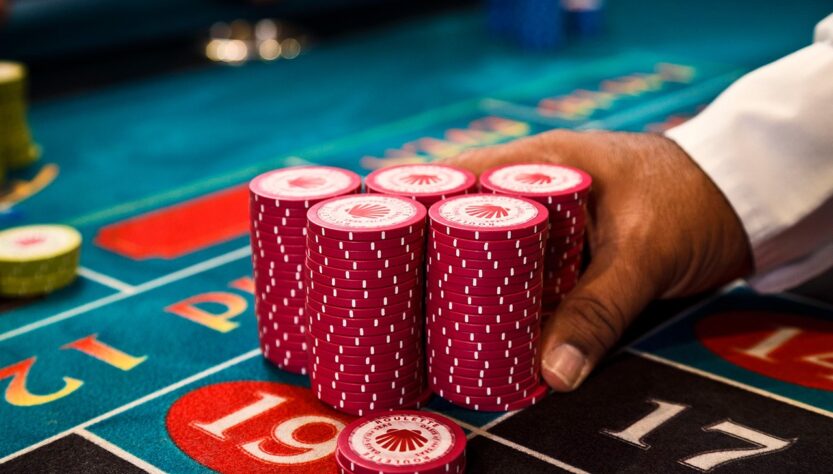
There's a harsh reality that any new player encounters. There's a virtual table, on a platform such as CUANSLOT88, you've been through a few instructional videos that you've seen, you've learned the hand rankings, and you're eager to take on the felt. Then, somehow your chips are gone. And again. The truth is that poker is a game of mistakes--specifically, making fewer of them than your opponents. Even the world's best players make mistakes, but have been able to recognize and remove the most costly mistakes and avoid them from the game. For novices, the gap between the perceived level of knowledge and the actual competence is often stuffed by a series of predictable mistakes which deplete bank accounts and destroy confidence. Knowing these common mistakes is the first step toward sealing your leaks and creating the foundation to make real progress. Here are ten detailed things to learn about the most common mistakes new poker players make.
1. Doing too many hands
This is the common beginner's mistake, the one which separates the successful from those who keep wondering where their money went [citation:11). In the beginning the game, every hand can be exciting. What's that 7-5 offsuit? Could it hit a straight. Is that the Q-3 you're looking for? You can never be sure. But math isn't lenient. If you play more than 20-25% on your hands prior to a flop most likely to be a mistake the majority of tables [citation 11. It's all about patience and selection. Be focused on playing solid starting hand from good angles, and learn how to fold the rest. The dread of folding is not as painful as the stress of losing with poorly played hands.
2. Dismissing Position
Players who are new often make decisions just based on their cards, ignoring where they are seated at the table. Your positioning relative to button on the dealer is one the most significant factors in the decisions you make2. The last option in a betting round offers you the irresistible advantage of seeing what everyone does before committing chips. Beginners often play too many hands in the early position in which they are forced to act first despite having no prior knowledge. They're also unwilling to play more hands at a later stage which is where they are able to steal blinds and control the action. If you're not adjusting your hands based on the hand's position, you're losing cash.
3. Making Losses, Chasing and Playing on Tilt
Poker is a sport of swings. The best players also lose games they should have won. The difference between professionals and amateurs is how they react to losses. When newbies experience a rough heartbeat, something happens emotionally. They get into a mood known as "tilt"--frustration, anger, and impulsiveness that leads to reckless choices [citation: 6]. They start chasing losses by playing more games, smacking their hands with garbage, and then trying to force a win in order to "get to even." This is almost never successful. The player who chases losses can end up digging a larger hole. Understanding when you're on the wrong side and having the discipline to walk away even for 15 minutes, is vital to longer-term survival [citation 99.
4. Poor Management of Bankrolls
A lot of novices treat their poker funds as a single pool of money. They'll wager on stakes that they feel exciting regardless of whether or not their bankroll will be able to handle the inevitable variance [citation:2]. The most basic rule experienced players adhere to is the rule of 1-2 and never put more risk than 1,2% total funds in a single buy-in or game [citation:88. If you've $100 in your casino account, you've zero business participating in tournaments that have buy-ins for $20. In the end, you'll be broke before hitting your lucky streak. Begin with the lowest stakes and only raise the stakes when you've consistently beaten your current level [citation:5].
5. Believing in passive play and avoiding Aggression
Beginners often slip into an uninvolved mindset. They call when they should bet, raise when they should bet, but generally let others manage the game [citation: 44. It's especially common at the blinds, when players are hesitant to "see an uninspiring flop" with mediocre hands [citation:44. The problem with passive game is that there is no any pressure on opponents and seldom improves the value of your hands. Good poker requires aggression. If you've got a hand that's likely best, bet it and then raise it. If you're the one who is first to act do not automatically check, instead think about leading out. This can make mistakes out of your adversaries and creates bigger opportunities when they're in the lead.
6. Calling Too Much and Bluffing Too Little
This omission is naturally rooted in the state of mind. The first-timers call too often especially when on the river [citation:10]. They end up becoming "calling stations," and recouping opponents' betting on value with hands that do not have a chance to win. There's a psychological component here--players aren't keen to feel as if they've been deceived, so they call in order to "keep their opponents honest." But the flip side is that beginners don't always bluff enough [citation 10It's a shame that beginners don't always bluff enough. They're scared of being caught and looking foolish. The result is a pattern that is predictable: they are only betting when they have the ability to win, and will only fold when they're confident they'll lose. Proficient players recognize and make use of this pattern.
7. Believing that weak hands and drawings are worthless
Ace-king is gorgeous preflop, however, if the hand misses your completely, it's Ace-high. Beginners fall in love with huge starting cards and will not ever to take them off even when the board is clearly risky. The same is true for new players who overvalue drawing hands. They'll seek flush draws or straight draws without understanding the pot odds. They make huge betting bets with no likelihood of hitting [citation]. When they do make their draw, they often don't get the best value and try out fancy check-raises which will backfire [citation :1]. Learning to fold a confident hand when the situation calls for it is a sign of maturation.
8. Unaware of Opponents
Some beginners play as if they're all alone at the table, focused entirely on their own cards and making decisions. The reality is that poker is a contest of people, not just cards [citation:2(2). Experiential players constantly monitor their adversaries: Who is in a tight way? Who is loose? Who is apathetic? Who calls down with weak hands? Who rages after the loss? The information you gather is worth gold. On platforms such as IDN Poker, you have tools to note down players. Utilize these tools. Anyone who does not pay attention to their opponents is playing a totally different -- and significantly less profitable than the player who is attentive to everyone who is at the table.
9. Gaming Too Many Tables for too long
The online format tempts players to maximize their volume. Four tables, six tables and the excitement never ceases. For the novice player it's a disaster [citation: 55. The ability to read opponents, understand bet sizing patterns, or recognize tells as you try as you try to manage six games simultaneously. Begin with just one or two tables per table. Be attentive. Notes. Review each decision. In the same way, playing for hours without breaks leads to fatigue and then to errors [citation: 55. Your brain is in need of rest. Take regular breaks, step away from your screen and then return refreshed.
10. Afflicting a lack of study and learning from Mistakes
The last mistake is a error of failing to improve. Many players lose to lose and get up the next day and repeat the same errors [citation:7]. Poker is a game that requires continual learning. The successful players tend to review the game's rules, identify shortcomings, and try to repair them [citation: 9There are many ways to improve your poker game. This could mean reading articles, watching training videos, speaking with experienced players, or simply taking the time following each session to reflect on key decisions. If you're not learning, you're losing ground, as somewhere in the world they're studying to beat you.
